
Recorded in Christchurch in the early 1990s, the Charles Upham Tapes preserve the voice of Captain Charles Hazlitt Upham, VC and Bar — the only combat soldier ever awarded the Victoria Cross twice. Across approximately eight hours of interviews, they offer an extraordinary window into the lived experience of New Zealanders in the Second World War, capturing Upham exactly as he was: direct, analytical, modest, and utterly without self‑glorification.
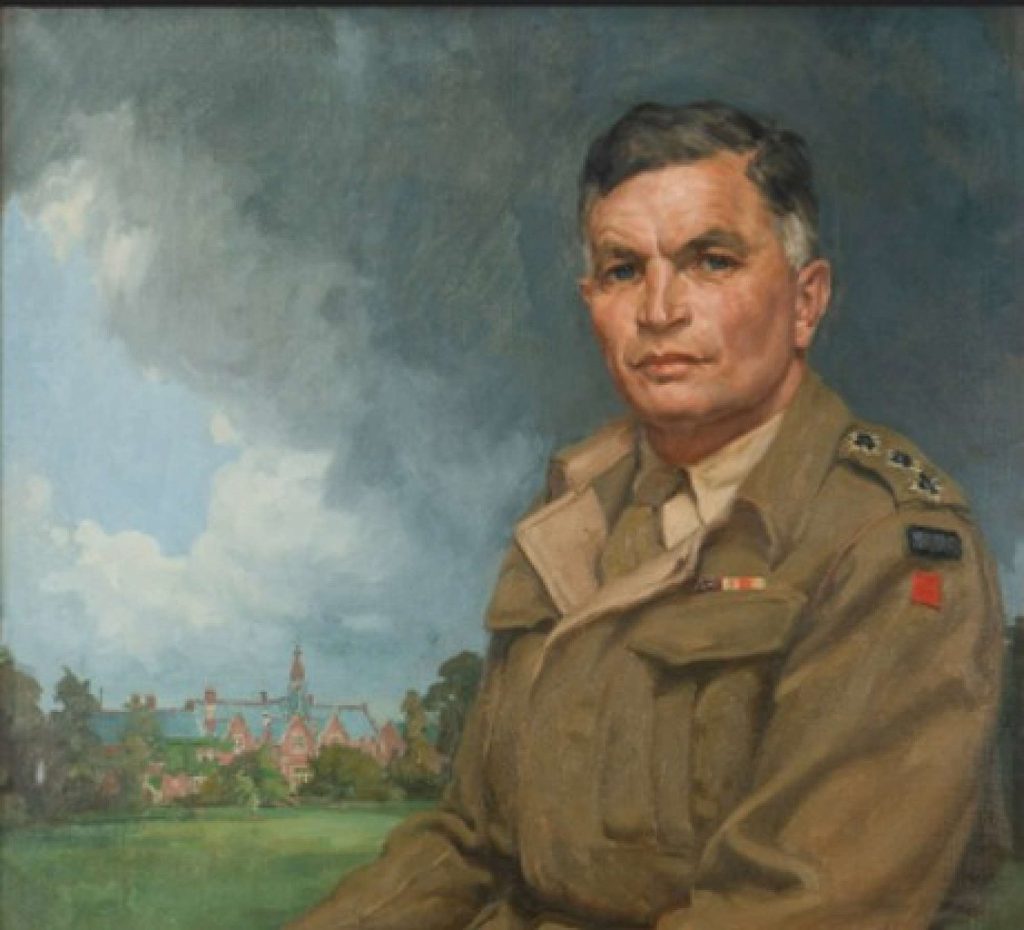
Across five major recordings, the tapes move from the chaos of the Greek and Crete campaigns to the brutality of captivity in Italy. More than war stories, they preserve a rare first‑person account of leadership, loyalty, endurance, and survival, while revealing the human character behind one of New Zealand’s most storied soldiers.
A Soldier’s View of Crete
The tapes provide one of the most detailed soldiers‑level accounts of the Battle of Crete held anywhere in the world. Upham describes the German airborne assault with clarity that only a frontline officer could possess: the vulnerability of paratroopers drifting down under fire, the undefended Tavronitis Riverbed, and the critical delay in counterattacking Maleme Airfield. His testimony challenges long‑held assumptions about the battle, highlighting the gap between well‑trained New Zealand infantry and inexperienced mid‑level officers who had spent decades in peacetime roles.
These insights are invaluable. They allow historians to understand not just what happened, but why it happened—and how the New Zealand Division learned, adapted, and matured in the desert campaigns that followed.
Courage Without Romance
What makes the Upham tapes so compelling is the absence of heroism in his own telling. He speaks of clearing machine‑gun posts with grenades, running out of pistol ammunition, and being saved at point‑blank range by a fellow soldier. Yet he frames these moments not as feats of bravery, but as the natural behaviour of a man responsible for his platoon.
He repeatedly emphasises the ethic that defined New Zealand infantry culture: never let your mates down. For Upham, courage was not an individual virtue but a collective responsibility. This perspective is essential for understanding why New Zealand soldiers earned such a formidable reputation in the Mediterranean theatre.
The Human Cost of War
The later tapes shift from combat to the aftermath—illness, wounding, and captivity. Upham’s descriptions of dysentery, jaundice, and double pneumonia are among the most vivid medical accounts in New Zealand’s wartime record. His experiences in Italian POW hospitals—overcrowded, filthy, and fatally under‑resourced—are harrowing. Five men died in his own ward. Amputations were performed without adequate drugs. Gangrene was a death sentence.
Yet the tapes also reveal moments of profound humanity: the young nuns at Castel San Pietro who cared for prisoners despite having almost no food; the camaraderie among POWs who shared watches, food, and hope; and the revival of a wounded Māori soldier after whisky was poured down his feeding tube.
These stories remind us that war is not only fought on battlefields. It is endured in hospitals, prison camps, and the quiet spaces where men confront fear, pain, and uncertainty.
A National Legacy
The Upham tapes matter because they preserve more than historical detail. They preserve character. Upham’s humility, his impatience with bureaucracy, his loyalty to his men, and his discomfort with personal recognition all shine through. When he speaks of the Victoria Cross, he insists it belongs to the whole unit. When he describes leadership, he frames it as service, not authority.
For New Zealanders, these recordings are a rare chance to hear—not myth, not legend, but the man himself. They deepen our understanding of the 2NZEF, the Mediterranean campaigns, and the values that shaped a generation.
In an era when living memory of the Second World War is fading, the Upham tapes stand as a cornerstone of our national heritage. They remind us that history is not only written in books—it is spoken, remembered, and carried in the voices of those who lived it.
Quote s from the Charles Upham Interviews:
· “Courage wasn’t individual — it was the fear of letting your mates down.”
· “Speed was everything. Hesitation cost lives.”
· “We weren’t heroes. We were a team trying to stay alive.”
· “The men were magnificent — I never had to tell them anything twice.”
· “The real danger came after the battle, in the hospitals and camps.”
· “Five men died in my ward. Survival was a matter of luck as much as strength.”
· “The nuns had nothing, yet they gave us everything they could.”
· “The VC was never mine alone — it belonged to the whole platoon.”
· “War teaches you quickly who you can trust.”
· “I wasn’t brave. I was impatient — and responsible for thirty men.”
CHARLES UPHAM
THE ORAL HISTORY TAPES
A Soldier’s War in His Own Words
Tapes 1–6 | 1941–1945
1. Early Life & Character
Tape 1
Charles Upham grew up on a Canterbury farm, shaped by hard work, independence, and a strong sense of fairness. Before the war he was a stockman, shepherd, and Territorial soldier. His values were simple: do the job properly, look after your mates, and never cut corners.
“I’d sooner be unemployed than a cheat.”
2. Crete: The First Victoria Cross Tape 2
In May 1941 Upham fought in the desperate defence of Crete. He led counterattacks at Maleme and Galatas, rescued wounded men under fire, and fought on despite exhaustion and wounds. His actions formed the basis of his first Victoria Cross.
“You had to get in close — that was the only way.”
3. Minqar Qaim: Breakout Under Fire Tapes 3A–3B
In June 1942 the New Zealand Division was surrounded at Minqar Qaim. Upham scouted enemy positions, then helped lead a night breakout through German lines. He stood on a moving truck under tracer fire and destroyed enemy vehicles with grenades.
“The tracer was going over our heads — pink, blue, yellow.”
4. Ruweisat Ridge: The Bar to the VC Tapes 4A–4B
At Ruweisat Ridge in July 1942 Upham was wounded repeatedly but continued to fight, directing his men and attacking enemy positions. British armour failed to arrive, and the New Zealanders were overrun. Upham was captured while severely wounded.
“I wasn’t going to stop just because I’d been hit.”
5. Captivity in Italy: Survival Against the Odds -Tapes 5A–5B
Upham’s early captivity was brutal. Italian hospitals were filthy, overcrowded, and short of medicine. He witnessed amputations without anaesthetic and refused surgery himself. He later suffered double pneumonia and jaundice at the same time.
“They took a fellow’s legs off without anaesthetic — the blood was shooting out.”
“The cure for pneumonia is to feed you — the cure for jaundice is not to feed you. I had both.”
6. POW Life in Germany: Escape & Endurance
Tapes 6A–6B
Transferred to Germany, Upham became a persistent escape risk. His most dramatic attempt came at the Po River, where a bullet shot the heel off his boot as he fled through vineyards. He endured harsh camps, strict censorship, and the collapse of German morale.
“They were scared as hell — old blokes, Dad’s Army.”
“Three‑quarters of the food we ate was Red Cross.”
Upham was liberated by American forces in 1945.
THEMES ACROSS THE TAPES
Courage & Initiative - Upham repeatedly acted on instinct to protect his men, often taking risks others would not.
Loyalty & Responsibility - He always insisted the VC recognised the whole company, not him alone.
Survival & Resilience - From battlefield wounds to starvation and disease, Upham endured conditions that killed many around him.
Humanity in War - Despite everything, he showed compassion — even to wounded enemies.
KEY QUOTATIONS FROM THE SERIES
· “Speed is everything.”
· “The whole truck went ‘oof’ when the grenade went in.”
· “I wasn’t going to have that — so I got off the table.”
· “It knocked the heel off my boot — tripped me up.”
A Life of Service
The tapes reveal a man who rejected hero‑worship, disliked publicity, and believed deeply in fairness and duty. They show not a legend, but a soldier — determined, modest, and utterly committed to those he led.